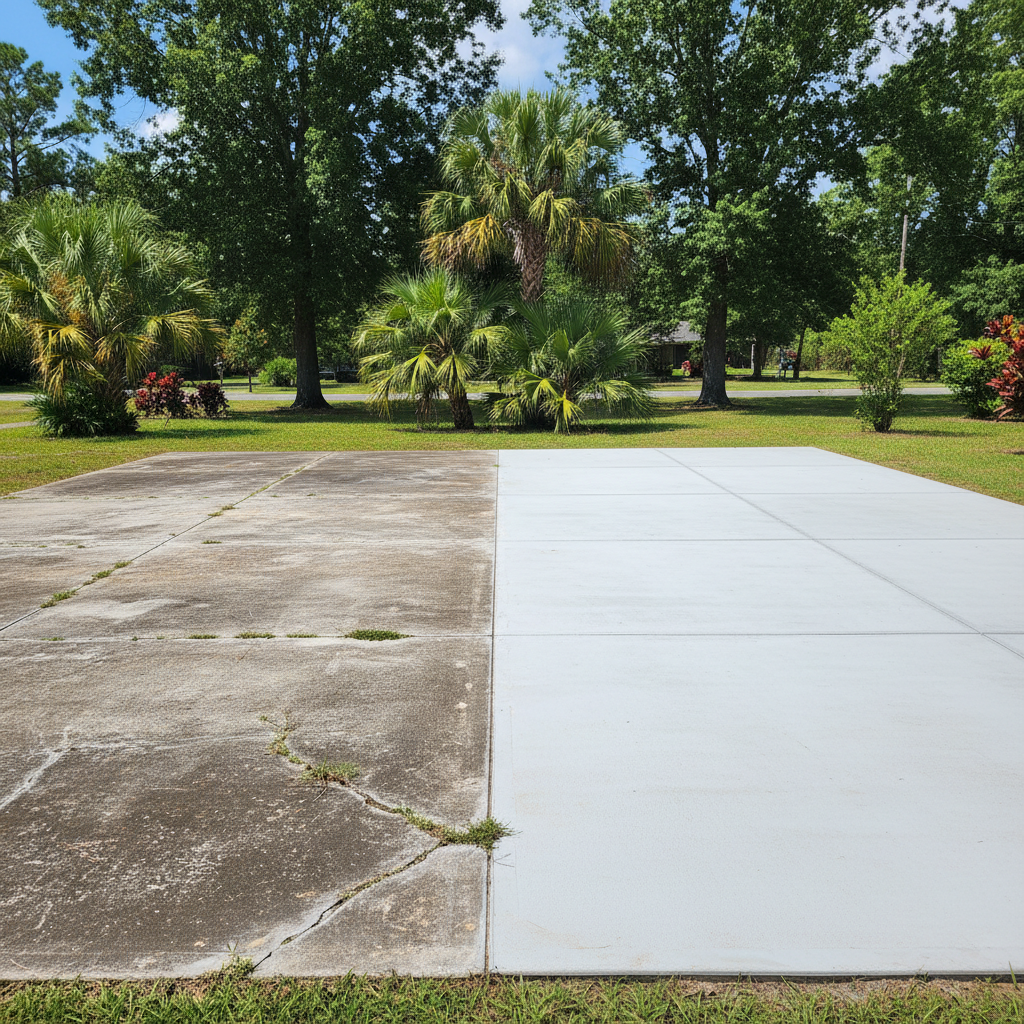
Choosing the right surface for a new driveway, patio, or walkway around your Mobile, AL property comes down to a few hard facts about our local environment. Between the heavy downpours we get off the Mobile Bay, our notoriously humid climate, and soils that often mix sandy loam with shifting clay, flatwork takes a beating. Homeowners usually find themselves torn between two main approaches: a traditional poured concrete slab or interlocking concrete pavers. We can look at how they actually compare when you install them right here in south Alabama.
The Cost Breakdown
Upfront costs usually drive the conversation. Pouring a standard broom-finish concrete slab is typically the more affordable route on a square-foot basis. You are paying for materials, grading, forming, and labor for a single cohesive pour. Pavers, on the other hand, cost more upfront. You have the cost of the individual manufactured units, plus extensive base preparation involving compacted gravel and bedding sand before anyone even lays the first stone. If you are working with a tight budget for a large backyard patio, poured concrete usually wins on day-one pricing for properties in Mobile, AL.
Durability and How They Handle Mobile Soil
Ground movement is real around here. If your sub-base is not packed tight, things will shift. A poured concrete slab acts as one monolithic sheet. If the ground washes out underneath it during a severe summer thunderstorm, the slab can crack right across the middle. Fixing a cracked slab often means mudjacking or tearing it out. Pavers offer a built-in advantage when it comes to flexibility. Because they are individual units separated by joints, they can shift slightly with the soil without snapping. If a tree root pushes up a section of pavers, you can pull them up, fix the base, and relay the exact same stones. However, poor base prep will cause pavers to sink unevenly just as fast as a slab will crack.
Maintenance Realities in the Humidity
Port City Concrete always tells homeowners to think about the long-term upkeep for Concrete Contractor projects. Poured concrete is simple to clean; a pressure washer clears off the grime and pollen that coats everything in spring. You should seal it every few years to keep moisture from penetrating, but otherwise, it is very low maintenance. Pavers require a different kind of attention. Those joints between the pavers need polymeric sand to keep weeds from sprouting and ants from moving in. In our humid climate, green algae loves to grow in shaded paver joints, meaning you will likely spend more weekends pulling weeds and reapplying joint sand.
Appearance and Design Flexibility
A standard concrete slab is functional, clean, and straightforward. You can dress it up with a color tint or a textured finish, but it still looks like a slab. Pavers offer endless design possibilities. You can mix shapes, patterns, and earth-toned colors to match your home exterior or landscape design. If curb appeal and custom aesthetics are your top priorities, pavers provide a high-end look that plain concrete just can not match for homes in Mobile, AL.
Making the Final Call
If you need a solid, no-nonsense driveway or a utility pad that handles heavy loads and minimal upkeep, a properly poured and reinforced concrete slab is hard to beat. If you are building a backyard patio where drainage flexibility and custom styling matter most, and you do not mind a little extra joint maintenance down the road, pavers are worth the investment. Match your choice to your budget, but whatever you do, do not skimp on the sub-base preparation. For homes and businesses in Mobile, Port City Concrete provides expert Concrete Contractor services.